“Green criminologists challenge the traditional criminal justice system’s insistence on identifying a direct human victim before recognising an act as a serious crime.”
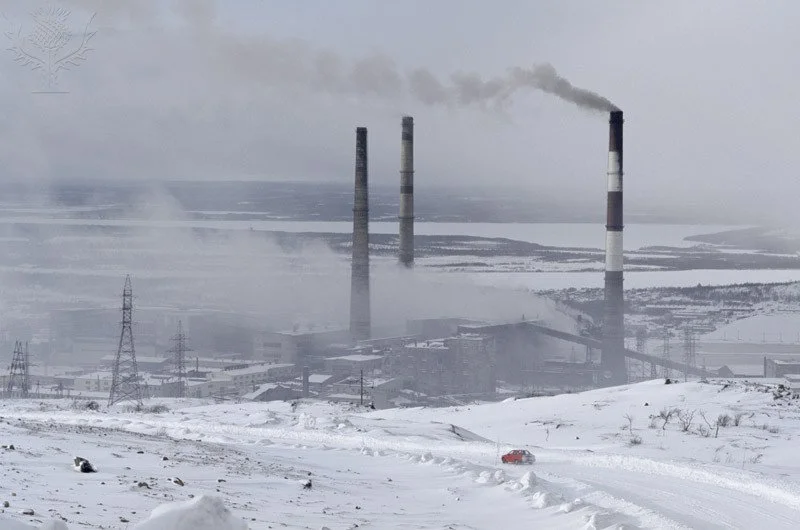
Pollution. Image from Brittanica Image Quest.
Every year, industrial activities alter global ecosystems, contaminate water tables, deflate biodiversity, and accelerate climate collapse. Yet, the vast majority of these destructive practices are carried out with state permits, corporate backing, and full legal immunity.
This divide between legal permissibility and ecological devastation forms the core focus of Green Criminology.
Green Criminology or Environmental Criminology?
Before examining the theoretical foundations of green criminology, it is necessary to clarify an important terminological distinction within the discipline. In classical criminological literature, environmental criminology traditionally refers to spatial and situational analysis, in other words, the study of how physical geography, urban design, and immediate surroundings influence criminal opportunities (Brantingham and Brantingham, 1981).
Conversely, green criminology, a term coined by Michael J. Lynch in 1990 and expanded significantly by Nigel South (1998), focuses explicitly on ecological harm, environmental justice, and species injustice.
Green criminology operates at the intersection of criminology, ecology, and international law. It expands traditional legalistic frameworks by questioning why actions that destroy the natural world are routinely treated as mere regulatory infractions or "externalities" of economic growth, rather than serious acts of deviance.
Spectrum of harms
To categorize ecological harm objectively, green criminologists divide analytical perspectives into three primary theoretical frameworks (White, 2008):
Anthropocentric (human-centred): focuses on environmental destruction through the lens of its impact on human populations. Harm is evaluated based on how pollution, deforestation, or resource extraction affects human health, economic livelihoods, and socio-economic equality.
Ecocentric (ecosystem-centred): rejects the idea that nature exists solely for human utility. This perspective views ecosystems as interconnected wholes possessing intrinsic value, arguing that the destruction of rivers, forests, or biomes constitutes a harm regardless of immediate human utility.
Biocentric (species-centred): focuses on species justice and animal rights, examining how human industrial systems inflict systemic harm, habitat destruction, and cruelty on non-human species.
By integrating these perspectives, green criminologists challenge the traditional criminal justice system's insistence on identifying a direct human victim before recognizing an act as a serious crime.
The campaign for an international law of ecocide
A pivotal development in the effort to bridge the gap between ecological harm and international criminal law emerged through the work of the late Scottish barrister and environmental pioneer Polly Higgins (1968–2019).
After years of practicing corporate law, Higgins observed that existing environmental regulations were structurally inadequate. While civil courts occasionally imposed fines on corporations for ecological disasters, these financial penalties were routinely brushed off as standard operating costs. The legal system lacked a mechanism to hold corporate executives and political leaders individually and criminally accountable for severe ecological destruction.
In 2010, Higgins submitted a formal proposal to the United Nations International Law Commission proposing that ecocide be recognized as the fifth core Crime Against Peace under the Rome Statute of the International Criminal Court (ICC), alongside genocide, crimes against humanity, war crimes, and the crime of aggression.
Higgins originally drafted the definition of ecocide as:
"The extensive damage to, destruction of or loss of ecosystem(s) of a given territory, whether by human agency or by other causes, to such an extent that peaceful enjoyment by the inhabitants of that territory has been or will be severely diminished." (Higgins, 2010).
Her work catalysed a global legal movement. Following her pioneering campaign, an independent panel of international legal experts produced a formalized legal definition of ecocide in 2021, defining it as "unlawful or wanton acts committed with knowledge that there is a substantial likelihood of severe and either widespread or long-term damage to the environment being caused by those acts" (Sands et al., 2021).
The concept of ecocide directly operationalizes green criminology: it seeks to codify ecological destruction as an international crime, establishing personal criminal liability for leaders whose decisions cause severe, long-term environmental devastation.
State-corporate crime and environmental injustice
Green criminology also provides a framework for analysing state-corporate environmental crime. This is a dynamic where state institutions and private corporations collaborate to facilitate resource extraction at the expense of environmental protection (Kramer, Michalowski and Kauzlarich, 2002).
In many jurisdictions, environmental regulatory agencies are susceptible to "regulatory capture," a process wherein the industries being regulated exert disproportionate influence over the governing bodies responsible for oversight. Consequently, environmental laws are often drafted to manage and permit environmental degradation rather than prevent it.
Furthermore, green criminologists highlight the structural reality of environmental injustice (Bullard, 2000). The physical harms of environmental degradation including toxic waste disposal, resource extraction, and industrial pollution to name a few, are disproportionately situated in marginalized communities and host nations in the Global South, while the financial profits accrue primarily to multinational parent companies based in affluent nations or in the Global North.
Conclusion
Green Criminology forces us to re-evaluate how society defines, regulates, and penalizes harm. By moving beyond traditional legal definitions, it provides an essential framework for studying ecological harms that threaten global stability yet remain protected under current legislative standards.
As international discourse around environmental governance evolves, the discipline raises critical questions about accountability: should catastrophic environmental destruction carry individual criminal liability? How do existing legal structures incentivize corporate harm? And what responsibilities do nations bear for ecological impacts that extend beyond their national borders?
References
Brantingham, P. J. and Brantingham, P. L. (eds.) (1981) Environmental Criminology. Beverly Hills: Sage Publications.
Bullard, R. D. (2000) Dumping in Dixie: race, class, and environmental quality. 3rd edn. Boulder, CO: Westview Press.
Higgins, P. (2010) Eradicating Ecocide: Laws and Governance to Stop the Destruction of the Planet. London: Shepheard-Walwyn.
Kramer, R.C., Michalowski, R.J. and Kauzlarich, D. (2002) “The Origins and Development of the Concept and Theory of State-Corporate Crime,” Crime and delinquency, 48(2), pp. 263–282. Available at: https://doi.org/10.1177/0011128702048002005.
Lynch, M. J. (1990) 'The Greening of Criminology: A Perspective on the 1990s', The Critical Criminologist, 2(3), pp. 11–12.
Pollution, Photograph, Encyclopaedia Britannica Image Quest, https://quest-eb-com.libezproxy.open.ac.uk/images/149_2027583
Sands, P. et al. (2021) Independent Expert Panel for the Legal Definition of Ecocide: Final Report and Commentary. Stop Ecocide Foundation.
South, N. (1998) “A Green Field for Criminology?: A Proposal for a Perspective,” Theoretical criminology, 2(2), pp. 211–233. Available at: https://doi.org/10.1177/1362480698002002004.
White, R. (2008) Crimes Against Nature: Environmental Criminology and Ecological Justice. 1st ed. Cullompton, Devon: Willan Publishing. Available at: https://doi.org/10.4324/9781315880723.