Criminology vs Criminal Justice
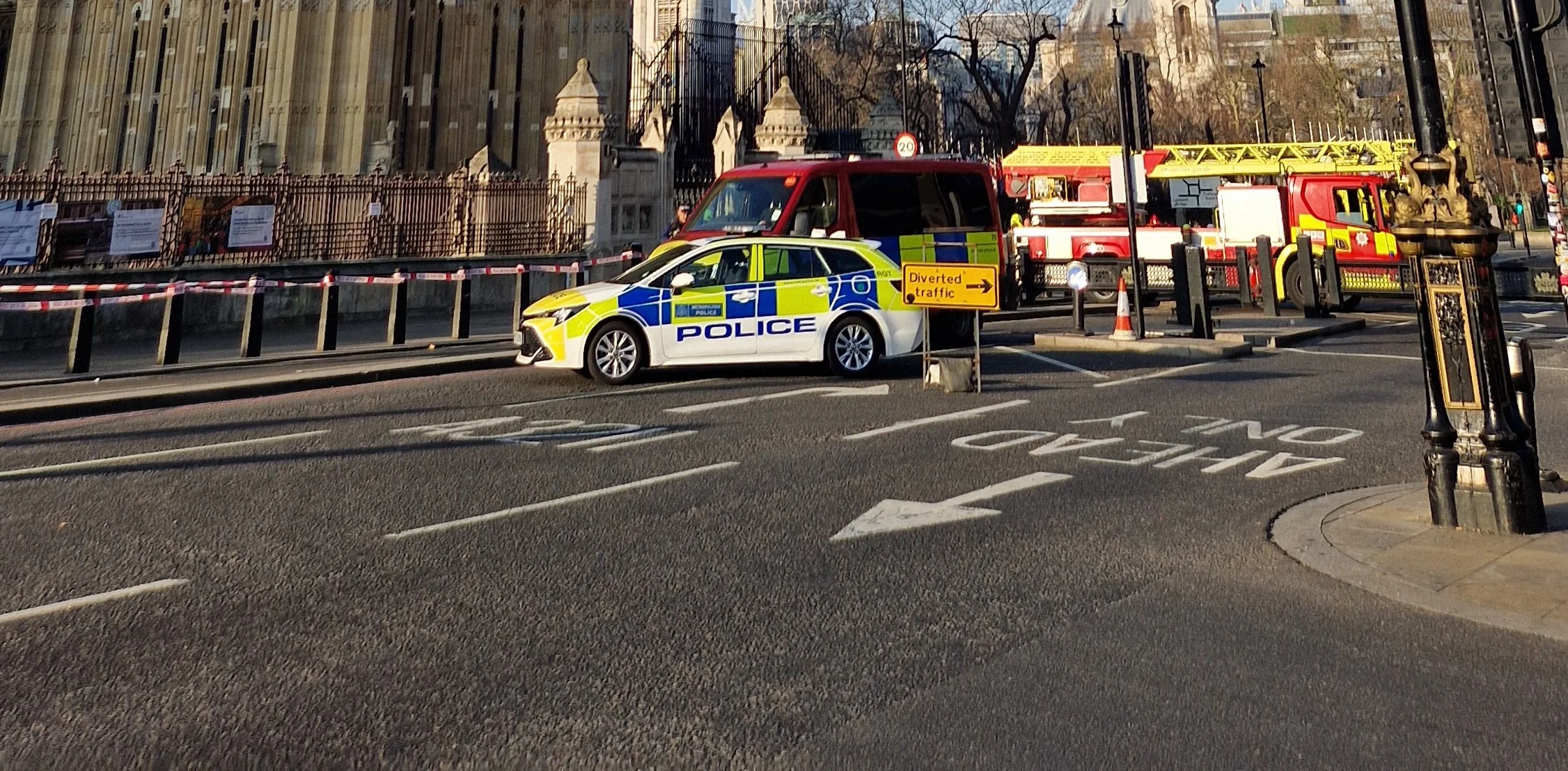
Image taken in central London.
Unravelling the "why" and the "how" of the legal world
If you browse the course catalogues of universities or career paths on the internet, you might find a persistent source of confusion: the difference between criminology and criminal justice. To the layperson, these terms are often used interchangeably, blended together by popular culture into a single, dramatic soup of crime scene tape, gavels, and psychological profiling. Television shows like CSI, Mindhunter, and Law & Order often collapse these distinct disciplines into single characters who chase down bad guys, analyse blood spatter, and psychoanalyze the killer all in one show.
However, in the real world, criminology and criminal justice are two distinct academic disciplines and career paths. While they are undoubtedly siblings, occupying the same house of law and order, they have vastly different personalities, methodologies, and goals. Students who enter these fields often find themselves at a crossroads: are they interested in the theoretical roots of crime, or the practical application of the law?
Understanding this distinction is not just a matter of semantics; it is crucial for anyone looking to build a career in the field. This blog post aims to dissect the "why" and the "how" that separate these two fascinating fields.
Theory vs practice
At its core, the difference between the two fields can be boiled down to a separation of theory and practice.
Criminology is a social science, a branch of sociology. It is the study of crime as a social phenomenon. It focuses on the "why." Criminologists are concerned with the genesis of criminal behaviour, the social impact of crime, and the psychology of the offender. They look at crime through a wide-angle lens, analysing patterns, trends, and demographics to understand what drives a person to break the law.
Criminal justice, on the other hand, is the study of the systems we use to respond to that behaviour. It focuses on the "how." It is an administrative and practical field concerned with pillars of the justice system: law enforcement, the courts, and corrections. Criminal justice professionals are the ones who apprehend suspects, prosecute defendants, and manage prisons.
To use a medical analogy: Think of society as a patient and crime as a disease. The criminologist is the medical researcher in the lab, studying the virus under a microscope to understand its genetic makeup, how it spreads, and how it can be prevented in the future. The criminal justice professional is the surgeon or the ER doctor, treating the patient directly, managing the symptoms, and performing the necessary operations to keep the patient safe.
Criminology
Criminology is deeply rooted in the social sciences. A student of criminology spends less time learning how to handcuff a suspect and more time reading Freud, Durkheim, and statistical reports. The primary goal of criminology is to uncover the root causes of criminality so that society can implement better policies to prevent it.
The curriculum of a criminology degree delves into the psychological and sociological factors that contribute to deviance. For instance, a criminologist might study the "dark figure of crime", the massive amount of unreported crime that never reaches police statistics, to understand the true safety of a neighbourhood. They examine the "nature vs nurture" debate, investigating whether a serial killer is born with a genetic predisposition to violence, or made through childhood trauma and environmental neglect.
Key areas of focus in Criminology include:
· Victimology: Shifting the focus from the offender to the victim to understand why certain demographics are targeted.
· Penology: The philosophy of punishment—does prison actually rehabilitate people, or does it make them better criminals?
· Juvenile delinquency: Why do minors commit crimes, and how does the "school-to-prison pipeline" affect marginalized communities?
Criminologists are the architects of reform. Their research informs the politicians and police chiefs, providing the data needed to say, "The current way we are policing drug crimes isn't working; here is a data-backed alternative."
Criminal Justice
If criminology is the architect, criminal justice is the builder. It is the system of practices and institutions of governments directed at upholding social control, deterring and mitigating crime, and sanctioning those who violate laws.
The criminal justice curriculum is designed to be pragmatic. To understand the legal boundaries of search and seizure, interrogation, and the right to counsel. The study of the hierarchy of policing, the intricacies of court procedures, and the management of correctional facilities.
The field is generally divided into three main components :
· Policing: The first point of contact. This involves maintaining public order, enforcing the law, and investigating crimes.
· Courts: where guilt or innocence is determined. This involves judges, prosecutors, and defence attorneys ensuring that due process is followed.
· Corrections: The aftermath of the verdict. This involves probation, parole, incarceration, and rehabilitation programs.
A criminal justice professional must be decisive and procedural. While a criminologist might ponder the socioeconomic reasons why a suspect stole a car, the police officer’s immediate priority is to secure the scene, gather evidence, and ensure public safety according to the letter of the law.
Case Studies
To fully appreciate the distinction, it helps to look at real-world moments where a criminologist’s "why" met a criminal justice professional’s "how." These examples illustrate the necessary partnership between the two fields.
1. The Minneapolis "Hot Spots" Experiment
In the late 1980s, criminologists Lawrence Sherman and David Weisburd crunched massive amounts of data in Minneapolis. They discovered a startling statistic: 50% of all calls to the police came from only 3% of the addresses (Sherman and Weisburd, 1995). This challenged the traditional assumption that crime was evenly spread across a city.
Police departments radically changed their patrol strategies based on this data. Instead of "random preventive patrol" (driving around aimlessly hoping to spot crime), departments began "hot spot policing," parking patrol cars specifically at those 3% of addresses during peak times.
This shift from reactive to proactive policing is now a standard in law enforcement worldwide. It showed that criminal justice agencies are most effective when they listen to the data analysis provided by criminologists.
2. The CSI effect
In the early 2000s, researchers began noticing a strange trend in courtrooms. Jurors who watched forensic TV shows like CSI seemed to have unrealistic expectations of scientific evidence. Criminologists and legal scholars, such as Judge Donald Shelton, conducted surveys to measure this phenomenon, investigating if it was leading to wrongful acquittals.
Prosecutors and judges had to alter their courtroom strategies to manage this psychological shift. Prosecutors began calling "negative witnesses", experts who testify solely to explain why DNA wasn't found at the scene, just to satisfy a jury that expected high-tech magic.
A study by the National Institute of Justice found that while the "CSI effect" might not always change the verdict, it drastically changed the process, forcing legal professionals to work harder to explain the reality of forensic science to laypeople (Shelton, 2008).
Career Pathways
Because the academic focuses are different, the career trajectories for these two majors diverge significantly, though they do occasionally overlap.
Criminology careers are often academic, analytical, or investigative in a non-sworn capacity. This includes:
· profilers or intelligence analysts: working for agencies like the FBI to analyse data patterns and predict criminal behaviour.
· policy analysts: working for think tanks or government bodies to draft legislation.
· victim advocates: helping survivors navigate the emotional and legal aftermath of a crime.
· professors and researchers: continuing the academic study of crime.
Criminal justice careers are operational. These are the "boots on the ground" roles. This includes:
· law enforcement officers: police officers, sheriffs, and federal agents (DEA, ICE, secret service).
· probation and parole officers: managing offenders who are re-entering society.
· court administrators: managing the logistics of the judicial process.
· correctional officers: overseeing the security and safety of inmates in prisons and jails.
It is worth noting that a degree in one does not disqualify you from the other. A police department will happily hire a criminology major, and a research firm might value the practical experience of a criminal justice major. However, the skills learned are specific: one teaches you to research and write, the other teaches you to enforce and manage.
Two Sides of the Same Coin
In the final analysis, criminology and criminal justice are symbiotic. The system cannot function effectively without both. Criminal justice relies on criminology to tell it what works. Without the research provided by criminologists, police tactics would be based on guesswork and tradition rather than evidence. Conversely, criminology relies on criminal justice to provide the raw data and the real-world laboratory where theories are tested.
For the student or career-changer standing at the crossroads, the choice comes down to a question of personality and purpose. If you are driven by abstract concepts, data analysis, and a desire to understand the human condition, criminology is your home. If you are driven by action, structural order, and a desire to directly uphold the law, criminal justice is your path. Both are essential, noble pursuits in the quest for a safer, fairer society.
References:
Shelton, D. E. (2008) ‘The “CSI Effect”: Does It Really Exist?’, National Institute of Justice Journal, (259), pp. 1-7.
Sherman, L. W., & Weisburd, D. (1995) ‘General deterrent effects of police patrol in crime “hot spots”: A randomized, controlled trial’, Justice Quarterly, 12(4), pp. 625-648.