“Human behaviour is deeply nuanced, and criminality cannot be entirely divorced from its broader sociological context. If we attribute deviance exclusively to personality disorders or internal cognitive distortions, we risk pathologizing the individual while ignoring the external environments that foster these behaviours.”
What drives an individual to cross the threshold into criminal behaviour? While sociologists examine how the external environment shapes the offender, criminal psychologists ask how the offender processes their environment. When we strip away the legal statutes and focus on the internal mechanisms of human deviance, we enter the complex domain of criminal psychology. Rather than looking for a deterministic "cause" of crime, this field focuses on cognitive mechanisms, personality traits, and neurobiological factors to understand whether these elements make an individual more susceptible to offending. By unpacking this cognitive architecture, the discipline seeks to understand not just how a crime was committed, but the internal rationalisation that made it possible.
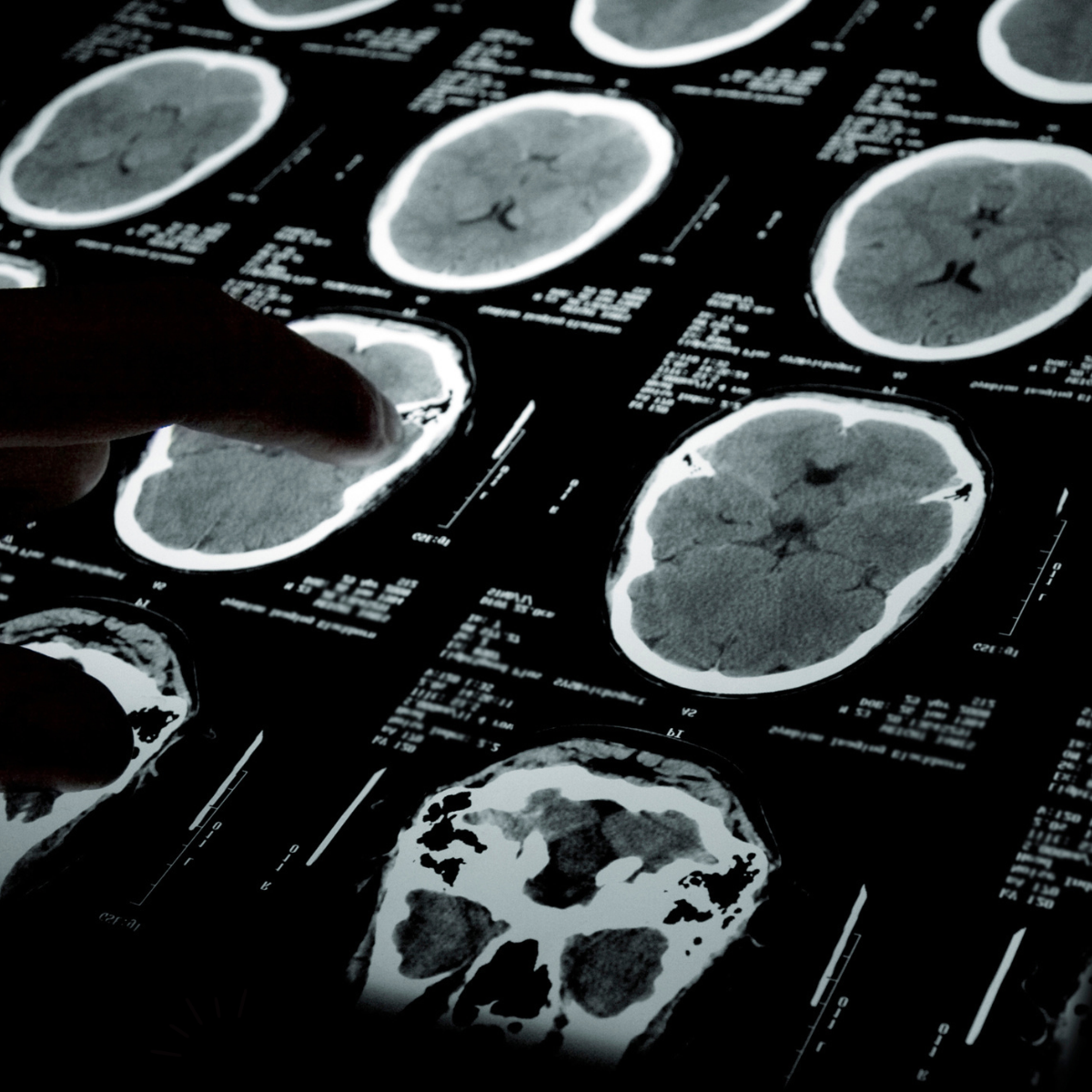
Image of brain scans (Canva).
So what is the discipline about?
In legal terms, for an individual to get a criminal conviction, it relies on a foundational equation: establishing the actus reus (the guilty act) and the mens rea (the guilty mind), provided the accused lacks a sufficient legal defence (such as duress, self-defence, or insanity). While the courts adjudicate the validity of these defences, criminal psychology is fundamentally the scientific study of the mens rea and the cognitive realities behind it.
Within legal proceedings, criminal psychologists play an essential role by providing behavioural insights, evaluating cognitive capacity, and offering expert testimony in court cases. Beyond the courtroom, their work spans the entire justice pipeline. From assisting law enforcement during investigations to assessing recidivism risk and informing rehabilitation programs. Rather than viewing criminal acts as isolated events, the discipline approaches offending as an active decision-making process shaped by internal reasoning and external pressures.
Cognitive mechanisms and rationalization
A primary focus of criminal psychology is uncovering the origins and motives behind offenses—examining how personality traits, mental health, brain development, family dynamics, and socioeconomic conditions interact with an individual's thought processes. A pressing question in this domain is how individuals commit offenses (even severe ones) without being overwhelmed by psychological distress.
It is vital to clarify a critical academic distinction: criminal psychology does not frame cognitive distortions as neurological defects, irresistible compulsions, or biological drivers that strip an individual of free will. Rather, cognitive distortions are active, self-serving patterns of thinking and perceptual biases that individuals employ to rationalize deviant choices they already know violate social norms. They do not cause crime in a deterministic sense; instead, they act as post-hoc or concurrent justifications that allow an offender to bridge the gap between their actions and their self-image. This framing ensures that the offender remains an active agent making a choice, rather than a passive victim of their own psychology.
The foundational work on this was established by sociologists Gresham Sykes and David Matza (1957), who developed the Techniques of Neutralization. They argued that offenders are not immune to conventional social norms; rather, they actively employ specific psychological defence mechanisms to temporarily neutralize these values, allowing them to offend without viewing themselves as "bad" people.
These techniques include:
Denial of responsibility: the offender claims they were a victim of circumstance (e.g., "I had a terrible childhood," or "I was heavily intoxicated").
Denial of injury: the offender minimizes the harm caused (e.g., "It wasn't stealing, I was just borrowing it," or "They are a massive corporation, they won't even notice the money is gone").
Denial of the victim: the offender insists the victim deserved the harm (e.g., "They disrespected me, so they brought it on themselves").
Condemnation of the condemners: shifting the blame to authorities (e.g., "The police and the judges are corrupt anyway").
Appeal to higher loyalties: defending the act as a necessity for a smaller, more important group (e.g., stealing to feed a family, or committing violence for a criminal network).
Ultimately, Sykes and Matza argued that these techniques demonstrate that delinquency does not stem from a total rejection of conventional societal standards. Rather, because offenders remain cognizant of these standards, they must actively neutralize them to protect their self-image from social or psychological censure. By employing these justifications, individuals manage internal conflict and maintain their agency, bridging the gap between societal norms and deviant choices.
Personality structures
Within the study of origins and motives, criminal psychology also examines distinct personality structures, most notably psychopathy. However, the academic reality of this condition differs wildly from its popular portrayal.
In clinical and forensic settings, psychopathy is measured using the Hare Psychopathy Checklist-Revised (PCL-R), developed by Dr. Robert Hare. The checklist evaluates traits such as a grandiose sense of self-worth, pathological lying, a profound lack of empathy, shallow affect, and impulsivity (Hare, 1999).
Statistically, the prevalence of psychopathy reveals a stark contrast between general society and the penal system. While individuals exhibiting true psychopathic traits make up approximately 1% of the general global population, they constitute an estimated 15% to 25% of the adult male prison population in North America and the UK (Kiehl and Hoffman, 2011). Furthermore, research indicates that psychopathic offenders are up to three times more likely to re-offend, and four times more likely to commit violent re-offenses, compared to non-psychopathic offenders (Hemphill, Hare and Wong, 1998).
It is crucial, however, to distinguish psychopathy from Antisocial Personality Disorder (ASPD). ASPD is a broad diagnostic category in the DSM-5 characterized by a pervasive disregard for the rights of others (American Psychiatric Association, 2013). A majority of incarcerated individuals meet the criteria for ASPD due to their history of rule-breaking and impulsivity. Psychopathy, conversely, is a much narrower, severe sub-category that involves distinct affective and interpersonal deficits. Not all individuals with ASPD are psychopaths, though most psychopaths meet the criteria for ASPD.
How does this field help law enforcement?
Beyond theoretical explanations of offending, criminal psychology provides vital investigative support to law enforcement. Rather than relying on sensationalized media tropes of intuition, professionals in this field focus on analysing crime patterns, offender spatial behaviour, and behavioural consistency across linked offenses to help narrow down suspect pools.
Equally critical is the application of psychological science to improve witness and suspect interviewing. Research into memory fallibility and cognitive load has transformed police interrogation practices, moving away from coercive tactics toward structured, non-leading methodologies (such as the Cognitive Interview), which maximize accurate recall from witnesses and reduce the risk of false confessions.
Risk assessment and rehabilitation
A further core pillar of the discipline is assessing the likelihood of re-offending (recidivism) and informing treatment or prevention programs. Rather than relying solely on unstructured clinical intuition, professionals utilize structured risk assessment frameworks, such as the Historical, Clinical, and Risk Management-20 (HCR-20), which combine static historical factors with dynamic clinical variables to evaluate an individual's risk of future violence (Douglas et al., 2013).
Crucially, these assessments are not designed to label individuals as deviant; instead, they guide targeted rehabilitation. By identifying specific dynamic risk factors, such as cognitive distortions, impulsivity, or substance abuse, treatment programs can encourage individuals and offer them the opportunity to think differently, dismantle self-serving rationalizations, and develop prosocial coping mechanisms.
The limits of psychological reductionism
However, it is essential to recognize the limitations of focusing exclusively on the internal workings of the individual mind. While criminal psychology offers invaluable insights into cognitive mechanics, relying solely on this branch risks falling into psychological reductionism (Walklate, 2007).
Human behaviour is deeply nuanced, and criminality cannot be entirely divorced from its broader sociological context. If we attribute deviance exclusively to personality disorders or internal cognitive distortions, we risk pathologizing the individual while ignoring the external environments that foster these behaviours. For instance, while cognitive distortions facilitate offending, it is frequently systemic factors (such as severe economic deprivation, family instability, lack of resources, or exposure to violent environments), that ultimately contextualize the offending behaviour.
Sociologists frequently critique an over-reliance on psychology, arguing that a spike in localized crime rates is rarely the result of a sudden outbreak of cognitive distortions. Rather, it is usually symptomatic of structural strain. Therefore, criminal psychology is most effective when it is not treated as a standalone explanation for deviance. It is just one theoretical lens, providing critical data on the mens rea, which must be constantly synthesized with sociological and environmental realities to form a complete picture of why crime occurs.
In conclusion
Criminal psychology forces us to acknowledge that criminal behaviour is rarely born in a vacuum. It is the end product of a complex interaction between thoughts, emotions, personality structures, developmental backgrounds, and the external environment.
By grounding investigations, courtroom testimony, risk evaluations, and rehabilitation in empirical frameworks, criminal psychology operates as a rigorous, evidence-based science. It is a discipline that recognizes that punishment alone does not change behaviour. If the criminal justice system wishes to genuinely reduce recidivism, it must invest in psychological interventions that address the specific cognitive patterns and environmental pressures heightening an individual's risk of offending. Understanding the mind of the offender is not about excusing choice; it is about uncovering the precise mechanisms required to prevent future harm.
References
American Psychiatric Association. and American Psychiatric Association Publishing. (2013) Diagnostic and statistical manual of mental disorders : DSM-5. Fifth edition. Arlington, VA: American Psychiatric Association Publishing.
Douglas, K. S., Hart, S. D., Webster, C. D. and Belfrage, H. (2013) HCR-20V3: Assessing Risk for Violence – User Guide. Burnaby, BC: Mental Health, Law, and Policy Institute, Simon Fraser University.
Hare, R. D. (1999) Without Conscience: The Disturbing World of the Psychopaths Among Us. New York: Guilford Press.
Hemphill, J.F., Hare, R.D. and Wong, S. (1998) “Psychopathy and recidivism: A review,” Legal and criminological psychology, 3(1), pp. 139–170. Available at: https://doi.org/10.1111/j.2044-8333.1998.tb00355.x.
Kiehl, K.A. and Hoffman, M.B. (2011) “The Criminal Psychopath: History, Neuroscience, Treatment, and Economics,” Jurimetrics (Chicago, Ill.), 51(4), pp. 355–397.
Sykes, G.M. and Matza, D. (1957) “Techniques of Neutralization: A Theory of Delinquency,” American sociological review, 22(6), pp. 664–670. Available at: https://doi.org/10.2307/2089195.
Walklate, S. (2007) Understanding Criminology: Current Theoretical Debates. 3rd edn. Maidenhead: Open University Press.